Digital twins — AU Logistics

Digital twins

We build your chain, then break it.

Before you sign a date, commit a buffer or accept a penalty, we run your supply chain thousands of times and tell you what it actually does.

A plan adds up averages. Nothing ever runs at the average.

Every leg of an international move has a number someone wrote down and a range it actually behaves in. Add the numbers and you get a date. Add the ranges and you get the truth — which is usually a lot wider, and always worse at the top end.

An international supply chain modelled leg by leg, plan against real range Six legs from the supplier's works to site. Each carries a planned duration and the range the model produces once real variability is applied: works two days planned against two to nine; origin port three against three to eleven; ocean twenty-one against nineteen to thirty-four; Australian port three against three to sixteen; road two against two to twelve; site one against one to four. The plan totals thirty-two days. The modelled range is thirty to eighty-six. THE PLAN THE MODEL WorksOrigin port OceanAU port RoadSite 2 days321 321 32 days on paper WorksOrigin port OceanAU port RoadSite 2–93–1119–34 3–162–121–4 30–86 modelled build slip,packing booking,gate slots schedule reliability,transhipment, weather inspection, treatment,berth queue permits, escorts,curfews crane,receiving Same chain. The plan adds up the averages. The model adds up what actually happens — and the two are not the same shape.

Illustrative figures, shown to explain the method. A live model is built from your own lanes, your own suppliers and published performance data for the ports and agencies on your route.

How it works

Four steps. About three weeks.

You don't need perfect data. You need the shape of the chain and a handful of real observations.

We map the chain

Every leg from the supplier's floor to your site. Who does what, who hands off to whom, and where the cargo waits. Usually the first time anyone has drawn it end to end.

We give each leg a range

Not a guess. Your own history where you have it, and published performance where you don't — schedule reliability, port turnaround, agency service standards, permit lead times.

We run it thousands of times

Every run is a different plausible week. Vessels bunch. An inspection lands. A permit takes the long road. You get the whole distribution, not one lucky path.

We answer the question you asked

Which option is better. What the date is really worth. Whether the terms you're about to sign can all hold at once. In writing, with the model behind it.

The cargo doesn't care what the plan said.

What it's worth

Three answers you can put in a contract.

This is the whole point. Not a report that sits in a drawer — three specific answers you can write into the terms, and defend later.

Which option actually wins

Two ports. Two packing methods. Flatrack or breakbulk. Eight free days or fourteen. We run both against the same weeks, so the comparison is clean — and the gap between two options is far sharper than either number on its own.

What you do with itThe winning option becomes the specification. A bidder can price a specification. It can't argue with one.

What your delivery date is really worth

A date set at the average gets missed about half the time. That matters enormously when there are damages attached to it. We tell you the odds on the date you're being asked to accept, and the date you'd need for the odds you actually want.

What you do with itMove the date, or price the risk, before signature instead of arguing about it afterwards.

Whether your terms can all hold at once

Each supplier signs up to their own leg. Nobody checks whether the transit commitment, the free time, the treatment window, the permit lead time and the crane booking are mutually possible. Often they aren't, and you find out in week nine.

What you do with itFix the term set before it becomes six separate contracts that quietly contradict each other.

And one answer we won't give you

A dollar figure. No modelled savings, no invented ROI, no "this will save you $400,000". A model of something that hasn't happened yet can't produce a number like that honestly, and anyone who hands you one is selling. If we ever do it, ask us to take it back.

The engine

This is it running.

Not a mock-up — a live screen recording of a model replaying, with the numbers coming off the same run.

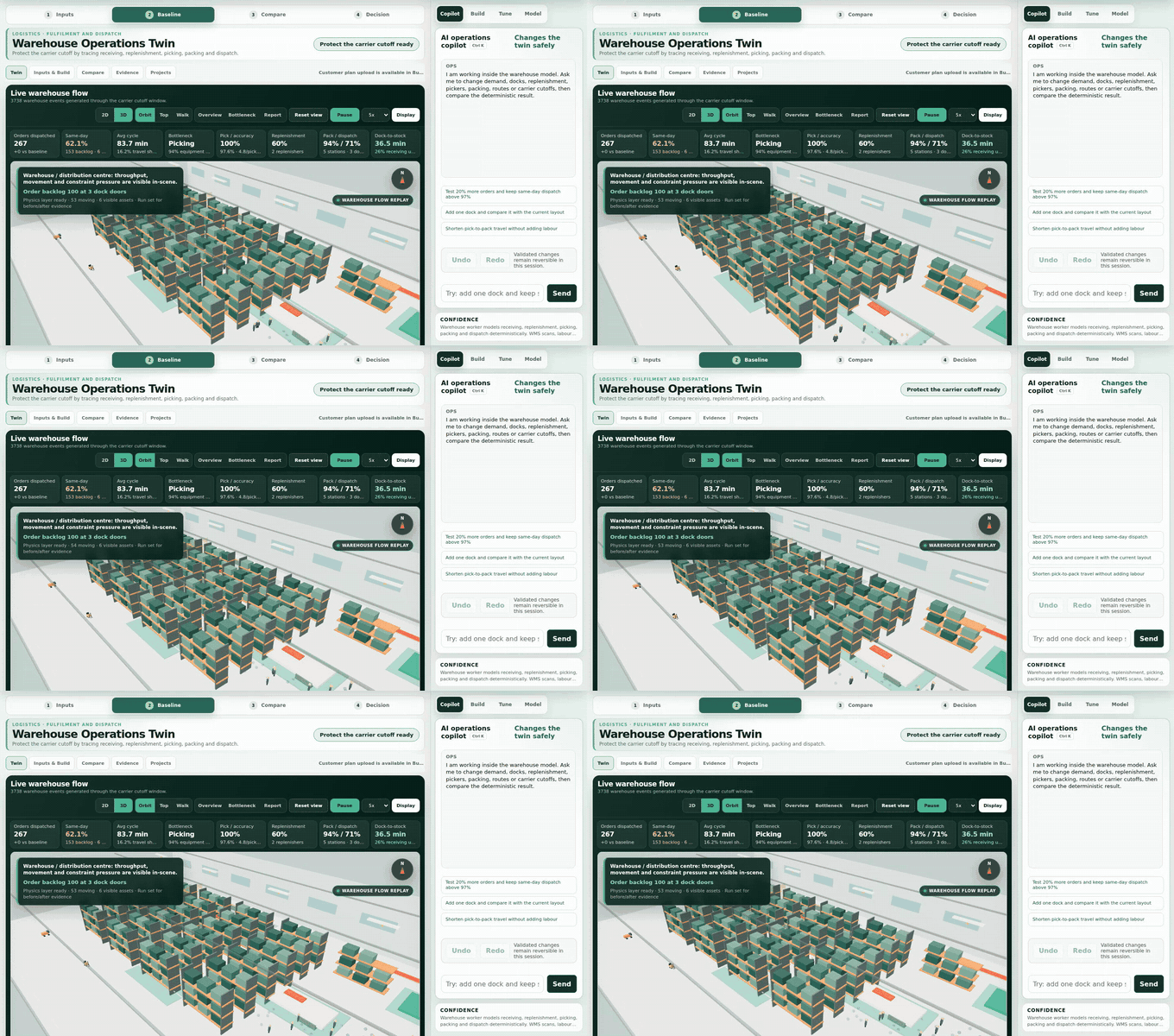
A live recording of the model running: a facility replaying in 3D while throughput, cycle time and the identified constraint update alongside
A working model, mid-run. Every figure on screen is emergent from the run — nothing is a formula evaluated on an assumption.

Want the detail? We published a full worked run — every table, the research each finding lines up with, and an honest account of what it cannot tell you. Read the worked run.

What are you about to commit to?

Tell us the decision and the date. We'll tell you on the first call whether a model would actually change it — and if it wouldn't, we'll say so.